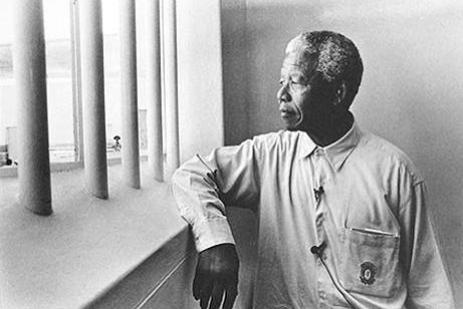
An anti-apartheid activist and the first South African president to be elected in a fully representative democratic election, Nelson Mandela served as president from 1994-1999.
Thursday, March 3, 2011
Government and Politics
South Africa is a multiparty parliamentary democracy in which constitutional power is shared between the president and the Parliament. The government is composed of three different branches:
- Legislature: The National Assembly and the National Council of Provinces
- Executive: The President, the Head of State and Head of Government, is elected by the members of the National Assembly
- Judiciary: The Constitutional Court is the highest court for interpreting and deciding constitutional issues, while the Supreme Court of Appeal is the highest court for nonconstitutional matters. Most cases are heard in the High Courts and Magistrates Courts.
Demography
Population (2010): 49.99 million
Composition: Black 79.4%; white 9.2%
Annual population growth rate (2009): 1.2%.
Languages: Official languages include Afrikaans, English, isiNdebele, isiXhosa, isiZulu, Sepedi, Sesotho, Setswana, siSwati, Tshivenda, and Xitsonga
Religions: Predominantly Christian; traditional African, Hindu, Muslim, Jewish.
Infant mortality rate (2010):47 per 1,000 live births.
Life expectancy: 55.2 years for women, 53.3 years for men
http://www.state.gov/r/pa/ei/bgn/2898.htm#people
The Rural Landscape
Like much of Africa, many of South Africa's rural towns are undeveloped and impoverished.
The Urban Landscape
Johannesburg, South Africa's largest city, is a bustling hub of commerce for the country
A Brief History of South Africa
- 1488- The Portuguese are the first Europeans to reach the Cape of Good Hope
- 1652- The Dutch East India Company establishes a provisioning station on the Cape,beginning permanent settlement
- End of 18th century- British gain control of the Cape of Good Hope. Subsequent British settlement and rule would mark the beginning of a long conflict between the Afrikaners and the English.
- 1948- The National Party (NP) won the all-white elections and began passing legislation codifying and enforcing an even stricter policy of white domination and racial separation known as "apartheid" (separateness).
- May 1961- South Africa abandons its British dominion status and declares itself a republic
- April 1994- The country's first nonracial elections are held, resulting in the installation of Nelson Mandela as President on May 10, 1994.
Geographic Information
South Africa has a coastline of over 2500 km, and it shares a desert border with Namibia. Because South Africa shares so much of its border with the Atlantic and Indian Oceans, harbors like the one in Cape Town serve as busy commercial ports. The country has a total of 9 provinces, ranging from the highly urbanized Gauteng to the vast arid Northern Cape. South Africa has several important cities: Cape Town, Bloemfontein and Pretoria. The Western Cape city of Cape Town is the legislative capital, housing the country's Parliament. In the Free State, Bloemfontein is the judicial capital, and home to the Supreme Court of Appeal. Pretoria, where a majority of the civil service is found, is the administrative capital, and the ultimate capital of the country. The largest and most important city is Johannesburg, the economic heartland of the country. While people may think of South Africa primarily as a savannah, it is home to many booming cities that are becoming increasingly
industrialized.
Subscribe to:
Posts (Atom)