
Thursday, March 3, 2011
Supply and Demand Graph for Natural Resources
South Africa is the second largest producer of gold and a cornucopia of mineral riches. It is the world's largest producer of chrome, manganese, and platinum. It is also the world's third largest coal exporter. As the country continues to mine and acquire its natural resources, its supply constantly decreases. This graph illustrates a decrease in supply.
 http://en.wikipedia.org/wiki/Economy_of_South_Africa

Socio-Cultural Aspects
South Africa is a melting pot of sorts. The Black population is divided into four major ethnic groups, the Nguni, Sotho, Shangaan-Tsonga and Venda. There are numerous subgroups of which the Zulu and Xhosa (two subgroups of the Nguni) are the largest. The majority of the White population is of Afrikaans descent, and there are eleven official language of South Africa. South Africa is a nation rich in indigenous, tribal arts of all kinds.
It is traditionally a deeply religious country with high rates of participation in religious life among all groups. The population is overwhelmingly Christian with only very small Jewish, Muslim, and Hindu minorities.
Unfortunately for South Africa, the country has gained a reputation for its strong affiliations with apartheid. Since then, the government has made significant improvements, and South Africa is now one of the fastest growing
Unfortunately for South Africa, the country has gained a reputation for its strong affiliations with apartheid. Since then, the government has made significant improvements, and South Africa is now one of the fastest growing
countries in Africa.
Nelson Mandela
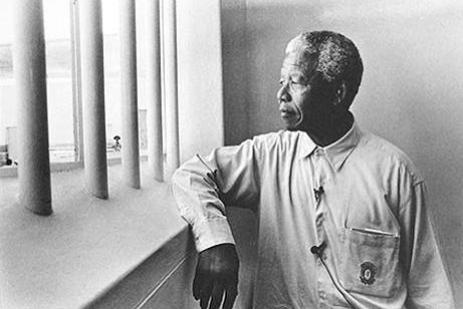
An anti-apartheid activist and the first South African president to be elected in a fully representative democratic election, Nelson Mandela served as president from 1994-1999.
Government and Politics
South Africa is a multiparty parliamentary democracy in which constitutional power is shared between the president and the Parliament. The government is composed of three different branches:
- Legislature: The National Assembly and the National Council of Provinces
- Executive: The President, the Head of State and Head of Government, is elected by the members of the National Assembly
- Judiciary: The Constitutional Court is the highest court for interpreting and deciding constitutional issues, while the Supreme Court of Appeal is the highest court for nonconstitutional matters. Most cases are heard in the High Courts and Magistrates Courts.
Demography
Population (2010): 49.99 million
Composition: Black 79.4%; white 9.2%
Annual population growth rate (2009): 1.2%.
Languages: Official languages include Afrikaans, English, isiNdebele, isiXhosa, isiZulu, Sepedi, Sesotho, Setswana, siSwati, Tshivenda, and Xitsonga
Religions: Predominantly Christian; traditional African, Hindu, Muslim, Jewish.
Infant mortality rate (2010):47 per 1,000 live births.
Life expectancy: 55.2 years for women, 53.3 years for men
http://www.state.gov/r/pa/ei/bgn/2898.htm#people
The Rural Landscape

Like much of Africa, many of South Africa's rural towns are undeveloped and impoverished.
The Urban Landscape

Johannesburg, South Africa's largest city, is a bustling hub of commerce for the country
Subscribe to:
Posts (Atom)