Wednesday, March 30, 2011

Employment in South Africa

A country of nearly 50 million people, South Africa also has a surprisingly high unemployment rate of 23.3%. As of 2007, 9% of South Africa's working population was involved in agriculture.  26% work in industry, and 65% of workers are in services.  As a very productive mining country, South Africa is the world's largest producer of platinum, gold, and chromium.  Other important industries include "automobile assembly, metalworking, machinery, textiles, iron and steel, chemicals, fertilizer, [and] foodstuffs." In  2010, the composition of South Africa's GDP by sector was as follows.
agriculture: 3%
industry: 31.2%
services: 65.8%
 
Female Estimated Earned Income (PPP US$): 7,328
Male Estimated Earned Income (PPP US$): 12,273
 
Index Mundi
CIA World Factbook
Human Development Report

Thursday, March 3, 2011

Supply and Demand Graph for Natural Resources

South Africa is the second largest producer of gold and a cornucopia of mineral riches. It is the world's largest producer of chrome, manganese, and platinum. It is also the world's third largest coal exporter.  As the country continues to mine and acquire its natural resources, its supply constantly decreases.  This graph illustrates a decrease in supply.

http://en.wikipedia.org/wiki/Economy_of_South_Africa

Socio-Cultural Aspects

South Africa is a melting pot of sorts.  The Black population is divided into four major ethnic groups, the Nguni, Sotho, Shangaan-Tsonga and Venda. There are numerous subgroups of which the Zulu and Xhosa (two subgroups of the Nguni) are the largest. The majority of the White population is of Afrikaans descent, and there are eleven official language of South Africa.  South Africa is a nation rich in indigenous, tribal arts of all kinds.
It is traditionally a deeply religious country with high rates of participation in religious life among all groups. The population is overwhelmingly Christian with only very small Jewish, Muslim, and Hindu minorities.
Unfortunately for South Africa, the country has gained a reputation for its strong affiliations with apartheid.  Since then, the government has made significant improvements, and South Africa is now one of the fastest growing 
countries in Africa.

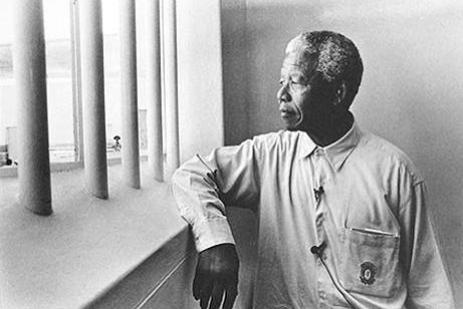
Nelson Mandela

An anti-apartheid activist and the first South African president to be elected in a fully representative democratic election, Nelson Mandela served as president from 1994-1999.

Government and Politics


South Africa is a multiparty parliamentary democracy in which constitutional power is shared between the president and the Parliament.  The government is composed of  three different branches:
  • Legislature: The National Assembly and the National Council of Provinces
  • Executive: The President, the Head of State and Head of Government, is elected by the members of the National Assembly
  • Judiciary: The Constitutional Court is the highest court for interpreting and deciding constitutional issues, while the Supreme Court of Appeal is the highest court for nonconstitutional matters.  Most cases are heard in the High Courts and Magistrates Courts.
All bodies of the South African government are subject to the rule of the Constitution, which is the supreme law in South Africa.  The constitution's bill of rights provides for due process including the right to a fair, public trial and the right to appeal to a higher court. The bill of rights also guarantees fundamental political and social rights of South Africa's citizens.