Thursday, April 7, 2011

Inequalities in South Africa

The primary problems with inequality in South Africa involve poverty and unemployment.  A great deal of the problems in South Africa spurn from racial issues and the lingering effects of apartheid. In the more than 15 year since the end of apartheid, South Africa has made some major improvements in its government, education, housing, and health programs. But while South Africa has made reform efforts, the country still struggles to create jobs and maintain equality in its employment.  As a result, those unemployed, more than ¼ of the population, live in poverty and squalor

One United Nations Report reveals that “Blacks constitute the poorest layer of the population, making up over 90 percent of the 21.9 million poor. In seven of the nine provinces more than 50 percent of the population lives in poverty.”  South Africa shares many problems that the whole of Africa does, but despite the surprisingly high unemployment rate, South Africa is one of the most productive and wealthy nations in the whole continent.

As a measure of the income distribution, the Gini coefficient represents the inequalities between incomes. Since 1995, South Africa’s Gini coefficient has risen from .596 to .635 in 2002.  South Africa is a country where the rich are extremely wealthy and the poor live in the poorest of conditions. The income distribution between the rich and poor in South Africa is shocking. 60% of South Africa’s population earn less than $7,000 per year, whereas 2.2% of the population earn more than $50,000 per year. As the working class falls further into poverty, the rich minority seems to be accruing more and more personal wealth.

With the inequalities in wealth and employment, South Africa is a ticking time-bomb for revolution.  Such protests, like the ones occurring in the Middle East, often arise from the youth, discontent with their ability to acquire jobs and the overall trends in government.  Because South Africa's government has been proactive in reforming other areas, they need to focus on the labor sector more.  For example, loosening the rigid labor regulations that restrict firms and their ability to expand would increase the employment rate.  While these problems cannot be solved instantly, South Africa needs to be proactive to get more of the lower class working for wages.

Other Source: World Bank

Wednesday, March 30, 2011

Employment in South Africa

A country of nearly 50 million people, South Africa also has a surprisingly high unemployment rate of 23.3%. As of 2007, 9% of South Africa's working population was involved in agriculture.  26% work in industry, and 65% of workers are in services.  As a very productive mining country, South Africa is the world's largest producer of platinum, gold, and chromium.  Other important industries include "automobile assembly, metalworking, machinery, textiles, iron and steel, chemicals, fertilizer, [and] foodstuffs." In  2010, the composition of South Africa's GDP by sector was as follows.
agriculture: 3%
industry: 31.2%
services: 65.8%
 
Female Estimated Earned Income (PPP US$): 7,328
Male Estimated Earned Income (PPP US$): 12,273
 
Index Mundi
CIA World Factbook
Human Development Report

Thursday, March 3, 2011

Supply and Demand Graph for Natural Resources

South Africa is the second largest producer of gold and a cornucopia of mineral riches. It is the world's largest producer of chrome, manganese, and platinum. It is also the world's third largest coal exporter.  As the country continues to mine and acquire its natural resources, its supply constantly decreases.  This graph illustrates a decrease in supply.

http://en.wikipedia.org/wiki/Economy_of_South_Africa

Socio-Cultural Aspects

South Africa is a melting pot of sorts.  The Black population is divided into four major ethnic groups, the Nguni, Sotho, Shangaan-Tsonga and Venda. There are numerous subgroups of which the Zulu and Xhosa (two subgroups of the Nguni) are the largest. The majority of the White population is of Afrikaans descent, and there are eleven official language of South Africa.  South Africa is a nation rich in indigenous, tribal arts of all kinds.
It is traditionally a deeply religious country with high rates of participation in religious life among all groups. The population is overwhelmingly Christian with only very small Jewish, Muslim, and Hindu minorities.
Unfortunately for South Africa, the country has gained a reputation for its strong affiliations with apartheid.  Since then, the government has made significant improvements, and South Africa is now one of the fastest growing 
countries in Africa.

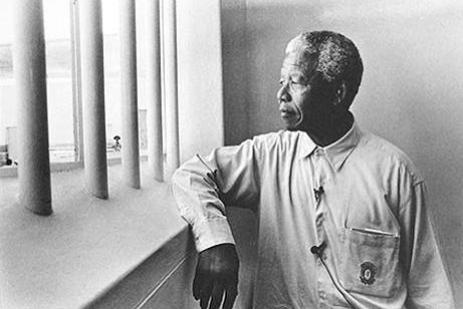
Nelson Mandela

An anti-apartheid activist and the first South African president to be elected in a fully representative democratic election, Nelson Mandela served as president from 1994-1999.